Wednesday, November 21, 2012

Cranberry Thanksgiving


For the last week and a half, we have been snuggling up and reading Cranberry Thanksgiving by Wende and Harry Devlin. Readers peek into the lives of Maggie and her grandmother, who live on a lonely cranberry bog in New England. On Thanksgiving Day, Mr. Whiskers, a furry and foul-smelling but generally nice friend, helps Maggie gather firewood while Grandmother bakes her famous cranberry bread, all while suspecting that Mr. Whiskers intends to steal the recipe. This is a story of simple farm life, warm holiday traditions, and the importance of character. We all learn (and re-learn!) by the end of the story, not to judge a book by its cover.

Cranberry Thanksgiving is a Five in a Row: Volume 1 selection.


Aidyn and I loved reading this little gem from the 70s. Here's what we covered:

Social Studies: Geography - New England

We talked about how this story is set in New England on a cranberry farm. After coloring the story disk, Aidyn went to his world map in search of New England. I prompted him to recall the Mayflower and what we learned last week about the pilgrims before asking, "Now where do you think New England is?" Luckily he plopped it in the right spot and even theorized why they named it New England.


Social Studies: History - Thanksgiving

The previous week, we had learned about the pilgrim's journey on the Mayflower. He colored in this picture of the crossing of the Mayflower from Enchanted Learning. We also watched some videos, including The Mayflower Voyagers (This Is America, Charlie Brown) [VHS].


You can see it on Youtube here.

We also read Gail Gibbon's Thanksgiving Day and talked about current Thanksgiving traditions.


Social Studies: Relationships

On another day, after reading Cranberry Thanksgiving, we talked about the special relationship Maggie has with her grandmother. Then Aidyn, with help, made a Grandmother Book with facts and stories all about his "Branny," with whom he has a very close and special relationship.

Math: Estimation

On the weekend, we read the book in the morning and did some fun math and science activities.

I brought out a 12 oz. bag of cranberries and a strainer. First I asked Aidyn to estimate how many cranberries were in the bag. He held it, squished it, and tossed it around before proclaiming that there must be "100 billion cranberries" inside. I taught him how to scale back that number and come up with a realistic estimate and how our guesses of estimation are rarely correct. The goal is just to get close. He still insisted on guessing 800.

I want to say "painstakingly," but we really had fun counting all 304 cranberries! Aidyn was only 500 off, but I think he learned about over-estimating, for sure.

He's also in Chapter 8 of his Houghton Mifflin California Math book. He's a pro at adding and subtracting single digits now. Yesterday we played Minus Maze, a board game where players solve subtraction problems in order to move their pieces. We played twice with Aidyn winning once and me winning once.

Science: Buoyancy and Bounce!

Right after estimating the cranberries, I asked Aidyn if they would sink or float. I hoped that he remembered we had watched How It's Made: Cranberries on Netflix, in which they show a cranberry bog!

He guessed, "float," so we made a mini-bog in a bowl and found that they do float!

The next experiment was to see how high they bounce. We pulled out our tape measure and launched those berries to the ground. The poor things barely bounced more than 18 inches at most, and that was mostly due to how hard we threw them. On their own, they probably bounced a whole 2 inches.

Wah-wah.

Still, it was fun!

Cooking 101: Cranberry Bread with Fresh Orange Juice and Zest

After talking about after 10 days, we finally made Grandmother's Famous Cranberry Bread, the recipe at the back of the book!


Aidyn helped chop cranberries, juice 3 oranges in the juicer, and crack and beat the egg. He also licked a spoon or two. In the end, we got a fresh loaf of citrusy, tangy cranberry bread, and it was delicious!


Non-FIAR activities:

At Aidyn's K-2 Art class, we've been busy making Indian Corn and a Teepee and an autumnal landscape scene.

He's been busy at his other art class, and only yesterday brought home a beautiful watercolor painting.

He's been perfecting his karate skills once a week and loves it! He has said that he would like to remain in karate and earn a black belt.

When it's not raining and pouring outside, he plays with his friends outdoors, making forts and building Legos.

Phonics and Reading:

He has mastered CVC words and is working on long vowels (CVCV words) and '-ai-' and '-ay' words, as well as a handful of new sight words.

His reading has become much more fluid, and his understanding of what he's read is sharp. I usually ask for oral narrations after he's read a story to check his comprehension.

We have been gently "testing" him on things we've covered during this first trimester. Surprisingly enough, he loves testing (probably because he's never had to take a test in public school!).

We had such a great time with Cranberry Thanksgiving. Next up for us is a virtual trip up north with Very Last First Time. Check back next week to see what we did!

Sunday, September 30, 2012

How to Make an Apple Pie and See the World + Apples in Harvest Unit

September is not only apple season, but Johnny Appleseed is remembered on his birthday, September 23rd, when children around the nation learn of his love for apples, animals, and humankind. In our homeschool, it was no different.

We rowed How to Make an Apple Pie and See the World by Marjorie Priceman, which is a Five in a Row: Volume 1 selection.

How to Make an Apple Pie and See the World is a humorous story of a girl who wishes to make to apple pie. When she finds that the market is closed, she hitches a ride to Italy for "superb semolina wheat." But she doesn't stop there. She travels all around the world for the best and freshest ingredients to make the best apple pie.

This book was unavailable at our library so we watched it on Youtube. Thank goodness for Youtube!


Day One: Social Studies/Geography

I had printed geography cards from Homeschool Share, and after "reading" we applied the cards on the map while talking about each location.

We talked about Sri Lanka being a pear-shaped island off the coast of India and Italy's resemblance to a boot.

Day Two:

The home-based charter school we belong to had an adorable K-1 Camp on Tuesday. Their theme was Apples in Harvest. Aidyn spent a few hours there with other children reading apple-related books, making crafts, and devouring applesauce. When he came out of his class, he was wearing a towering apple hat.


He made us smile when he walked out of the door. With the new autumnal wind that's starting to blow, we had a bit of difficulty walking this apple-sail boat to the car.

Day Three: Johnny Appleseed and Cooking

On the third day, we read The Story of Johnny Appleseed by Aliki. We read slowly and perused the pictures of the pioneering naturalist. Aidyn asked for an encore so we cuddled up and read through the story again.

During downtimes of our homeschool day, Aidyn watched other apple-related videos, including some old Disney favorites.

This was one of my favorite Disney shorts when I was little:
 

We also watched Disney's version of the Johnny Appleseed story:


Aidyn also watched a favorite video of his from the library: Apple Farming for Kids.  (This link will take you to their website.)

Later in the day, we were busy in the kitchen making homemade organic applesauce.


While cutting, cooking, and blending, he filled out some apple worksheets about apple parts.
 

We identified the core, leaf, seeds, flesh, stem, and skin. We also guessed how many apple seeds were in the first apple we cut. Aidyn guessed 3, and we counted out 10!


Afterward, we had a big bowlful of yummy, pink applesauce!

Day Four: Field Trip to Apple Hill in Placerville, Ca

On Friday, the family took a day-long field trip to Apple Hill, a close gathering of apple farms (over 50 farms in all!), in the evergreen-topped hills of Placerville, Ca. As our car climbed the hills, we noticed the red dirt, mammoth evergreens and beautiful sprawling vineyards.

Our first stop was Abel's Apple Acres.


Here's Aidyn with his dad, grandma, and some random bear that made our acquaintance.
 

Abel's Apple Acres not only had apple pies, apple fritters, apple donuts, apple butter, applesauce, apple cider, scores of apple and autumnal crafts, fudge and so many amazing goodies...


...but they also had horses for riding.

Aidyn chose Boots, and the two of them took a jaunt together.


We even found a Johnny Appleseed cut-out and a height measuring tree.


Proud to be 46 inches tall!

Later, we went down the road to a U-Pick apple farm. Armed with his bag and some tips from the farmer on twisting and yanking the apples off the branches, Aidyn plucked several apples from the trees.


We had so much fun at Apple Hill! Before leaving, we made sure to purchase a gallon of fresh apple cider, apple-pumpkin bread, and a classic apple pie.

 
We baked the pie when we got home that evening. I know that a home-baked apple pie would have been sweeter, but with my new pregnancy status, I'm delegating as much as possible! Here's Aidyn, sleepily chomping on apple pie.

What a delicious way to end a heartwarming unit study!


Thursday, September 27, 2012

Autumnal Outdoor Hour

It has been said that people usually favor the seasons in which they born. As a November child, I've always loved autumn-- the colors, the fragrances, the food! I'm thrilled that our outdoor hour nature walks will morph into these beautiful strolls among fiery leaves and cool morning air.

Yesterday morning, we were luckily enough to have Dad home with us, and we decided to take a walk to the corn field. It grows behind where we live, and, over the last few weeks, we have watched it sprout like magic beanstalks.


Venturing in always stirs up the excitement. For me, I was thinking of every horror movie I'd seen with creepy children or creatures emerging from the eerie corn fields. The two guys, though, bravely soldiered in.


It wasn't long before they started disappearing.


Aidyn, standing on Daddy's shoulders.


I love the excitement on his face.

 
And here's the Daddy. :)

This is going to be a beautiful season. I can just feel it.

To read about our other outdoor hour challenges, peruse these posts.


Monday, September 17, 2012

Saving-for-Disneyland Battle Plan

We are one month out from a long family vacation at Disneyland.  We know that certain items (everything from a cup of coffee to a souvenir t-shirt) are ridiculously expensive. Rather than deny ourselves the thrill of purchasing, say, a new Star Tours tee or Jack Skellington wallet, we learn where and how to cut corners.

I've already talked about to save money by cutting costs at home and how to make a trip to Disneyland a learning opportunity. Now I'll be laying out a battle plan to save money while on vacation.

1. Book a hotel/motel with a fridge.

Having a hotel with a fridge is super helpful. You can:

a) save that unfinished turkey leg you thought you could finish.
b) store water bottles, juice boxes from home, and snacks
c) store pre-prepared meals

Amount saved: Varies. Imagine all the extra meals and drinks you won't have to purchase.

2. Bring food/drinks with you (or purchase them in Anaheim)

Pack a cooler with high-protein snacks, healthy beverages, and pre-prepared meals. If you do not have room in your car for a cooler, run down to a nearby grocery store and buy sanely-priced food and drinks. Having food and drinks on hand will save you from buying overpriced selections in the park and nearby gas stations.

Plan ahead and buy these items at home using coupons or by visiting a discount store.

Amount saved: Water bottles in the park =$4 (multiply that by members in your party AND days at the park. Difference between an expensive meal ($25 to $8 or $10) adds up.

3. Bring food and drinks into the park.

Yes, you CAN bring food and drinks into the park, as long as you're not hording in giant picnic baskets. Water bottles and some snacks are reasonable items to bring into the park.

What You Should Bring:

  • water bottles (duh). With all that walking, you're bound to get dehydrated if you don't have water. Disneyland has water fountains all over the park for refilling.

  • healthy snacks. Fruit snacks made up of 99% high fructose corn syrup won't cut it. You need simple, healthy snacks that will keep hunger at bay and energy levels up. Good choices include: dried fruit, grapes, apples, oranges, string cheese, beef jerky, trail mix, seeds, or pretzels.  Snack on these while you're waiting in line, even if you're not hungry. By the time you are ready for a meal, you won't feel the desperate need to blow all your money on an overpriced burger only because it looks good or no other options are nearby NOW.
4. Bring your comfiest shoes.

How on earth does this save you money? Disneyland's First Aid station's biggest service is helping people who a) are dehydrated and b) who have sores on their feet.

Once you get a blister, it's dreadful to continue walking. Hobbling around the park means fewer rides for you, which equals well-earned money down the drain.

Wear comfortable shoes, and you'll outwalk the rest.

Saved: the aggravation of blisters, bandages, and missed opportunities.

5. Bring your own coffee maker/toaster/other needed appliance.

Some people don't think of this one. Many hotels charge guests for coffee pot use. Daily cups of joe at Denny's in the morning add up quickly. If you are someone who needs coffee in order to function, bring your own coffee pot, coffee, sugar, creamer, and cups and spoons.

Bring any other appliance that would help you make food in your hotel. Toast or Pop-Tarts in the morning is a nice way to eat something light before heading into the park.

Amount saved: daily cup of joe at Denny's = $2 (times family members and days in park)

6. Bring prepared meals to your hotel.

Make your family's favorite meal (or something they would actually want to eat) that would travel well. When we went to Disneyland for the half-marathon, we brought tupperware containers FULL of pasta. That tasty and high-protein/carb meal kept us full when we returned midday to our room and went back to the park.

You can make and bring: any variation of pasta (spaghetti, lasagna, etc.), macaroni and cheese, a casserole, a stew, burrito fillings, etc. Bring loaves of french bread or tortillas, too.

7. Return to your room midday.

There are many people who just "don't believe" in doing this. We've found that returning to your room midday:

a) restores your energy
b) allows you to refuel with food/drinks from home, thereby cutting costs
c) helps you avoid the most crowded time of day in Disneyland
d) gets you out of the sun when it's the most draining
e) helps you assess your money and come up with a new game plan for tackling the park
f) allows you to peruse the park map and see what you missed

We often return to eat lunch, take a quick nap, change clothes, swim in the pool, sit in the hot tub, zone out on TV to shut our brains off for a second, and rub each other's tired feet.  We usually come up with a new game plan for returning to the park. After an hour of recharging, it feels wonderful to burst back into the park, refreshed and remotivated.

If you book a hotel far away, you could always rest in the park. Find a quiet corner to sit and eat, watch a show like Aladdin or Great Moments with Lincoln. One time a friend and I stayed in the park, splurged on a coffee and sat for an hour, talking, on a quiet side street off Main Street.

8. When eating in the park, choose filling meals and/or share meals with family members.

If you want to eat in the park, pick something hearty that will keep you full for hours. The clam chowder bread bowls at the Pacific Wharf in Disney California Adventures are mightily filling and can be split between two people.

The Plaza Inn on Main Street serves big helpings of fried chicken and mashed potatoes that will keep you satisfied.

Rancho Del Zocalo in Frontierland serves big portions of delicious Mexican food that can be easily shared between two people.

If you're far off from a vacation at Disneyland, you could set up a savings game with your family. The Blue Bayou is an expensive but unforgettable sit-down restaurant inside the Pirates of the Caribbean ride. One year, we made a goal to eat there only using spare change. (No, we did not bring a sack of quarters to the restaurant!) For a whole year, we saved spare change in a jar and called it the Blue Bayou fund. Just prior to going to Disneyland, we cashed in our change, which totaled $127. With that we dined at Blue Bayou ( a $30/plate establishment) completely guilt-free.

This is our usual battle plan for saving cash at Disneyland. Saved money can be spent, without guilt, on treasure souvenirs. Are there any other tips you can think of for saving money at Disneyland? I would love to hear more!

Saturday, September 15, 2012

Mike Mulligan and His Steam Shovel

This week, we rowed Virginia Lee Burton's Mike Mulligan and His Steam Shovel. The story centers around a devoted hoisting operator, Mike Mulligan, and his near-obsolete steam shovel, Mary Anne. Even though Mike Mulligan takes good care of Mary Anne, steam shovels are becoming a thing of the past, replaced by gas, diesel, and electric shovels. Despite Mary Anne's obsolescence, Mike Mulligan moves out of the city and takes a job in the country, in the small town of Popperville, digging the cellar of the new town hall. He claims that Mary Anne can dig the cellar in one day and, if he can't deliver, the selectman, Henry B. Swap, won't have to pay. The pressure is on for Mike Mulligan and Mary Anne to finish the cellar job, but they have a crowd of fans and a bright young boy to urge them on.
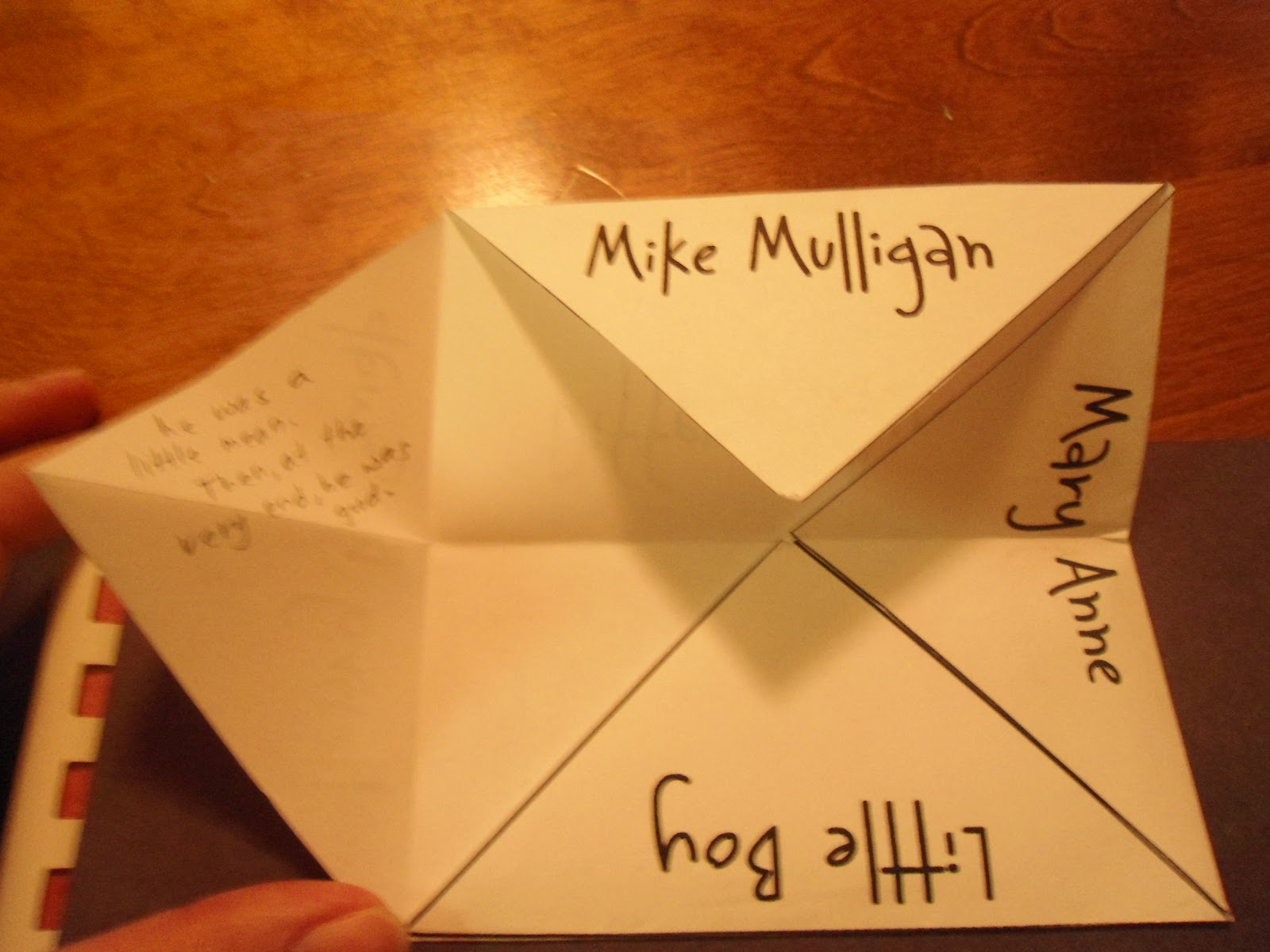
The story really communicates the importance of stewardship, diligence, and good old-fashioned hard work!

Mike Mulligan and His Steam Shovel is featured in FIAR: Volume One.


Language Arts- Story Writing Characters

The first day we read the story, we talked about characters in stories and how writers can include all sorts of characters-- good, mean, happy, helpful, trouble-making characters.

We talked about the specific characters in the story: Mike Mulligan, Mary Anne, Henry B. Swap, and the little boy. I asked him to tell me about those characters and what they are like and dictated his descriptions in our lapbook.


Social Studies- Character- Diligence
 
The FIAR book suggested focusing on stewardship and flexibility, but we emphasized diligence because midweek we had a homeschool class on character training that specifically addressed diligence.
 
On the second day of reading, we talked about diligence and how the characters exude a good attitude about working. We talked about how Aidyn shows diligence and what sort of jobs he does that require diligence.
 

The next day, we attended the character training class on diligence. The teacher, full of vim and vigor, taught them a song about diligence, which they sang and performed. She also told them a story about a family of beavers who worked hard to build a secure dam. We went home with a binder of more stories of diligent people in history, arts and crafts ideas for diligence, and ideas on how to be more diligent.

We also track Aidyn's good attitude through an informal point system. After Tuesday, we switched to Diligence Points. He earns point for showing diligence and is awarded with a field trip or extra fun activity at the end of the week. On Sunday, he's going to Six Flags with his Grammy.

Art- Drawing Trees in Motion

For art, we combined two of FIAR's suggestions, drawing trees and motion. On our Outdoor Hour Challenge, we observed trees and sketched two of our favorites. While reading the story again, we admired the way Virginia Lee Burton created the look of motion in her drawings.

Mama: How do you think she made the steam shovel look like it was moving so fast?
Aidyn: She made those swooshes up.

We decided to make our own "swooshes" on our trees to show wind blowing through the leaves.


Social Studies/Science-- Construction and Steam Power
 
We found a delightful video on construction machines called I Dig Dirt. It's a simplistic video about earthmovers, but it also introduced different kinds of earthmovers and how they work.
 
Aidyn also watched The Magic School Bus Gets Energized.


Cooking-- "Neat and Square" creations

Mary Anne diligently digs the cellar "neat and square." To illustrate, I made some Neat and Square Chocolate Pancakes one morning as a special treat.

(sorry, no picture there. I simply made a base pancake recipe and swirled in chocolate frosting. When they were done cooking, I used a square cookie cutter to make them "neat and square")

I also made a Neat and Square Chicken Casserole.


And, for the finale, I made the ubiquitous Neat and Square Chocolate Cake with (a version of) Mary Anne in the center, digging like crazy.


I used Buncha Crunch for the rocks.


I made the cake late one night, and it was absolute torture for Aidyn to wait all night for it to cool in the fridge. But, as a special treat, we each ate a slice for breakfast as we read Mike Mulligan one last time (for now).
 
(I wish I had pictures of our chocolate breakfast, but my camera battery had died.)
 
After "breakfast," we talked more about squares. I pulled out his dry-erase board and asked him to describe a square.
 
I played around with him, drawing shapes to his specifications.
 
A: It's a shape with four sides.
 
I drew a rectangle.
 
A (laughing): No, no, no. Those sides are too long. The sides are the same!
 
I drew a rhombus.
 
A (laughing more): Oh, my gosh! No, that's a rolled-over square! These lines are straight up and down.
 
M: And what about the corners? Are they n---?
 
A: Neat and square!
 
After we got the laughs out, Aidyn drew a square, found and cut one out of a magazine, and, with help, wrote the definition of a square.
 

Many of our ideas and projects came from Five in a Row: Volume 1. I also consulted Homeschool Share and was inspired by Delightful Learning.